When the App Fails: Who Is Legally Responsible for Your Safety?
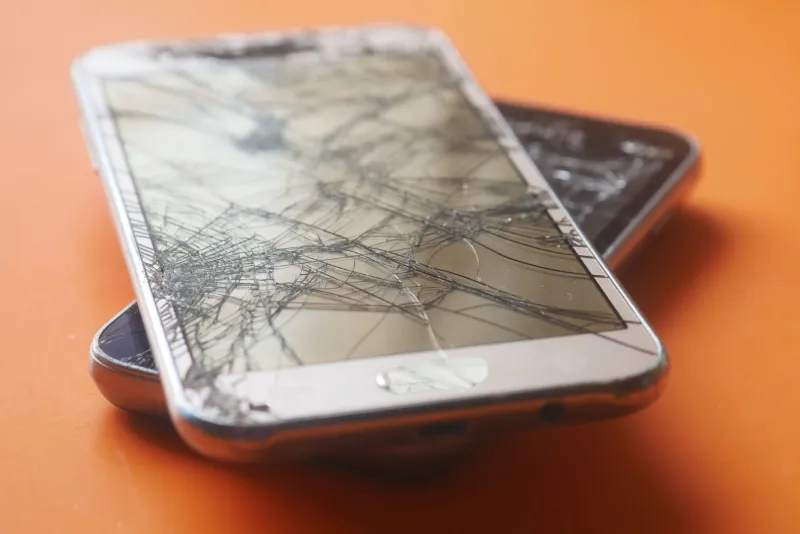
Imagine pressing an emergency button on your safety app and nothing happens. The SOS fails to transmit. No alert reaches your emergency contacts. No call connects to a dispatch center. You are alone, in danger, and the tool you trusted to protect you has gone silent.
For most users, this scenario feels hypothetical. For a small but documented number of Americans, it has been their reality. And when they or their families have sought answers — or accountability — they have encountered a legal and regulatory environment that offers them very little.
This is the liability question at the heart of personal safety technology: when an app fails and someone is harmed as a result, who bears responsibility?
The Terms of Service Problem
The short answer, in most cases, is: the company does not.
Virtually every personal safety app on the market — including those that charge monthly subscription fees and market themselves as life-saving tools — includes language in their terms of service that explicitly disclaims liability for service failures. These clauses, typically buried in dense legal text that users scroll past during onboarding, state that the platform is provided "as is," that the company makes no guarantees of availability or performance, and that users assume all risk associated with reliance on the service.
This is not unique to safety apps. Similar language appears in the terms of service for social media platforms, cloud storage services, and countless other digital products. But in the context of personal safety, the stakes of that boilerplate are qualitatively different. When a photo-sharing app goes down, users lose access to their pictures. When a safety app goes down at the wrong moment, someone may lose their life.
The question of whether such broad liability waivers should be enforceable in the safety technology context has not been definitively resolved by U.S. courts. What is clear is that, as of now, they have generally been upheld — leaving users with limited legal recourse.
Documented Cases of App Failure During Emergencies
Reliable aggregate data on safety app failures during genuine emergencies is difficult to obtain, in part because companies are not required to report such incidents and have strong incentives not to publicize them. However, individual cases have surfaced through litigation, journalism, and consumer complaint filings.
Reported failures include GPS location data that failed to transmit accurately during an SOS event, leaving emergency contacts with incorrect information about a user's whereabouts. Other cases involve apps that crashed during high-stress interactions, automated check-in systems that failed to escalate when a user did not respond, and emergency calling features that did not connect due to network handoff errors between cellular and Wi-Fi.
In several instances documented in consumer complaint databases maintained by the Federal Trade Commission, users reported that safety app companies were unresponsive to post-incident inquiries and directed complainants to their terms of service rather than engaging substantively with what had gone wrong.
What Legal Recourse Actually Exists
For users who believe they or a family member were harmed due to a safety app failure, the legal pathways are narrow but not entirely absent.
Negligence claims are theoretically possible if a user can demonstrate that the company owed them a duty of care, that the company breached that duty through specific design or operational failures, and that the breach directly caused demonstrable harm. In practice, establishing these elements against a well-resourced technology company — particularly one with strong contractual disclaimers — is extraordinarily difficult and expensive.
Consumer protection statutes at the state level offer another avenue. If a company's marketing claims can be shown to be materially misleading — for example, advertising a feature as reliable when the company had documented knowledge of its failure rates — state attorneys general or private plaintiffs may have grounds to pursue action under unfair or deceptive practices laws. This is a more promising avenue than direct negligence in some jurisdictions, but it requires establishing that specific representations were false and that consumers relied on them to their detriment.
Class action litigation has been used in the broader technology sector to address systemic product failures, and it remains theoretically available in the safety app context. However, the small number of documented individual incidents, combined with the difficulty of attributing specific harm to app failure rather than other factors, makes class certification challenging.
The FTC has increased scrutiny of technology companies' data practices and marketing claims in recent years, and there is growing regulatory interest in the safety technology space. But formal enforcement actions specifically targeting safety app performance failures remain rare.
What the Regulatory Landscape Currently Lacks
There is no federal regulatory framework specifically governing the performance standards or liability exposure of personal safety applications. Unlike medical devices — which are subject to FDA oversight — or financial products — which are regulated by multiple federal agencies — consumer safety apps occupy a largely unregulated space.
This gap has drawn attention from consumer advocacy organizations, who argue that apps marketed explicitly as life-safety tools should be subject to minimum performance standards, mandatory incident reporting, and enforceable liability exposure when failures cause harm. Legislation addressing this gap has been proposed at the state level in several jurisdictions but has not yet advanced significantly.
In the absence of regulation, the primary accountability mechanism is market pressure: users who lose confidence in a platform's reliability stop using it, and companies that develop reputations for failure lose customers. This mechanism is imperfect, particularly given that failures during genuine emergencies are both underreported and difficult to attribute with certainty.
What Users Should Know Before They Rely on Any Safety App
Given the current legal landscape, users who incorporate safety apps into their personal protection strategy should take several practical steps.
First, read the terms of service — specifically the sections addressing liability, service availability, and dispute resolution. Understand that by accepting these terms, you are generally waiving your right to hold the company responsible for service failures.
Second, test the features you intend to rely on. An SOS function that works in a controlled test is not guaranteed to work under real-world conditions, but a function that fails in testing is a clear warning sign.
Third, never rely on a single safety tool. A safety app should be one layer in a broader protection strategy that includes known emergency contacts, familiarity with local emergency services, and non-digital backup plans.
Finally, document any failures you experience. If a feature malfunctions, record the date, time, and circumstances, and report it to both the company and the FTC. Aggregate complaint data is one of the primary inputs that regulators use when assessing whether enforcement action is warranted.
Personal safety technology holds genuine promise. But that promise is only meaningful when users understand both the capabilities and the limits of the tools they are trusting with their protection — and when the industry is held to standards that match the stakes involved.