When the Signal Dies: Building a Safety Plan That Survives Without Technology
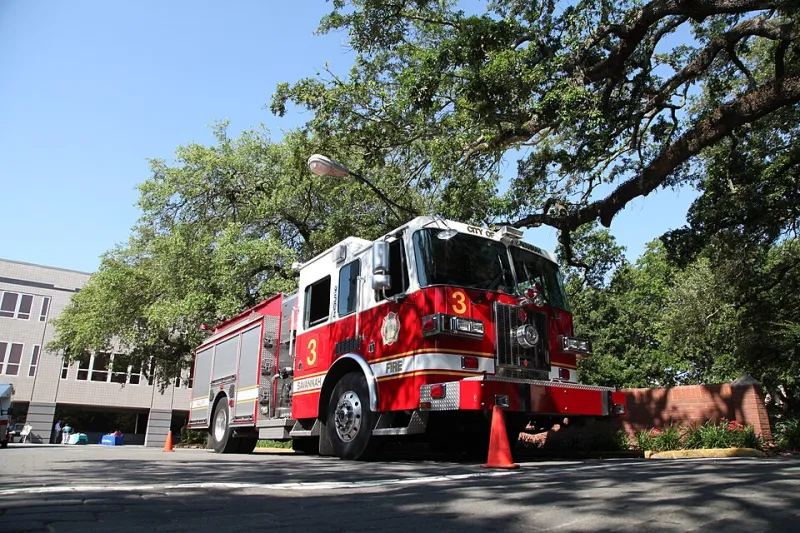
Photo: U.S. Army Corps of Engineers Savannah District, Public domain, via Wikimedia Commons
In the hours following a major earthquake, hurricane, or large-scale power outage, emergency responders consistently report the same phenomenon: the people who fare best are those who had a plan that did not depend entirely on their phones. This is not an argument against digital safety tools. It is an argument for understanding their limits—and preparing for the moments when those limits become life-or-death realities.
Safety apps are sophisticated, genuinely useful, and increasingly capable. They can alert emergency contacts, share precise GPS coordinates, and connect users to first responders with a single tap. But they operate within a fragile ecosystem: cellular networks, internet connectivity, charged batteries, and functioning device hardware. Remove any one of those elements and the app, however well-designed, becomes inert.
The question every safety-conscious person should be asking is not whether their app works under normal conditions. It is whether their broader safety plan survives when conditions are anything but normal.
The Infrastructure Problem
Cellular networks in the United States are more reliable than they have ever been, but they are not infallible. The Federal Communications Commission has documented widespread outages following hurricanes Harvey, Maria, and Ian, each of which knocked out tens of thousands of cell sites across affected regions. The 2021 winter storm that paralyzed Texas disrupted not only power but telecommunications infrastructure across the state for days.
These are not edge cases. They are recurring events in a country that spans diverse geography, extreme weather patterns, and aging infrastructure. And they demonstrate, repeatedly, that the moments most likely to require emergency communication are precisely the moments most likely to make that communication impossible.
Dead batteries compound the problem. A phone that runs out of power during an extended emergency—when charging is unavailable and portable batteries have been depleted—is no longer a safety device. It is a paperweight. The average smartphone battery, under normal use, lasts roughly one day. Under the elevated usage that accompanies an emergency—constant calls, GPS activity, flashlight use—that window shrinks considerably.
The Gap No App Can Fill
Safety platforms are designed to function within normal operating parameters. They are not, in most cases, designed to account for the cascading failures that accompany serious emergencies. When a network goes down, an SOS message cannot be transmitted. When a battery dies, a check-in cannot be completed. When a service is experiencing a regional outage, even a fully charged phone on a functional network may be unable to reach the platform's servers.
This gap is not a flaw in any particular application. It is a structural limitation of technology-dependent systems. Recognizing it is not pessimism—it is the foundation of genuinely comprehensive safety planning.
Building the Analog Layer
The most effective response to this limitation is not to abandon digital tools but to build a parallel set of protocols that operate independently of them. Think of it as a safety plan with two tracks: one digital, one analog, each capable of functioning without the other.
Establish a household communication protocol. Every member of your household should know what to do if they cannot reach each other by phone. This means designating a physical meeting point—one near the home and one further away in case the immediate area is inaccessible—and establishing a check-in schedule that does not require a device. Agree on a specific time each day when everyone will be at or near the meeting point if normal communication has failed.
Identify a designated out-of-state contact. During regional emergencies, local phone lines are frequently overwhelmed while long-distance calls go through more easily. Designating a single out-of-state contact whom all family members can reach—and who serves as a central information hub—is a practice recommended by FEMA and has been validated repeatedly in real-world disasters.
Keep a written emergency card in your wallet. Store the phone numbers of your emergency contacts, your out-of-state contact, and your local non-emergency police line on a physical card that travels with you at all times. If your phone is lost, stolen, or dead, you will still have access to the numbers you need.
Invest in a portable battery bank and maintain it. A high-capacity portable charger, kept charged and stored in your go-bag or car, can extend your phone's usability by several days under emergency conditions. This is one of the lowest-cost, highest-impact investments in communication resilience available to most households.
Consider a battery-powered or hand-crank radio. NOAA Weather Radio broadcasts emergency alerts on dedicated frequencies that remain operational during most infrastructure failures. A small, inexpensive radio can provide critical situational awareness when every other information source is unavailable.
Integrating Analog and Digital Protocols
The goal is not to choose between technology and analog backup systems. It is to design a safety plan in which each reinforces the other. Your safety app handles the routine—automated check-ins, GPS sharing, quick-access emergency contacts. Your analog protocols handle the exceptions—the scenarios in which the app cannot function and a different set of tools and agreements must take over.
This hybrid approach requires some upfront investment: conversations with family members, a few physical purchases, and the discipline to practice the plan before it is needed. But it dramatically expands the range of circumstances under which your safety plan remains viable.
The Practice Problem
Perhaps the most overlooked element of communication-resilient safety planning is practice. Families who have agreed on a meeting point but never actually walked to it, or who have designated an out-of-state contact but never called that person, are operating on the assumption that they will remember and execute those plans correctly under extreme stress. That assumption is not well-supported by evidence.
Schedule a brief, low-stakes rehearsal of your analog protocols at least once per year. Walk to your designated meeting points. Make the call to your out-of-state contact. Verify that your written emergency card is current and legible. These small investments in preparedness make the difference between a plan that exists on paper and one that actually functions when it matters.
GetSafe's mission is to keep personal protection within reach—in every sense of that phrase. Sometimes reach requires a signal and a charged battery. And sometimes it requires a card in your wallet, a meeting point two blocks away, and a plan that everyone in your household knows by heart.