Panic Buttons in the Bleachers: How American Venues Are Becoming Safety Tech Test Beds
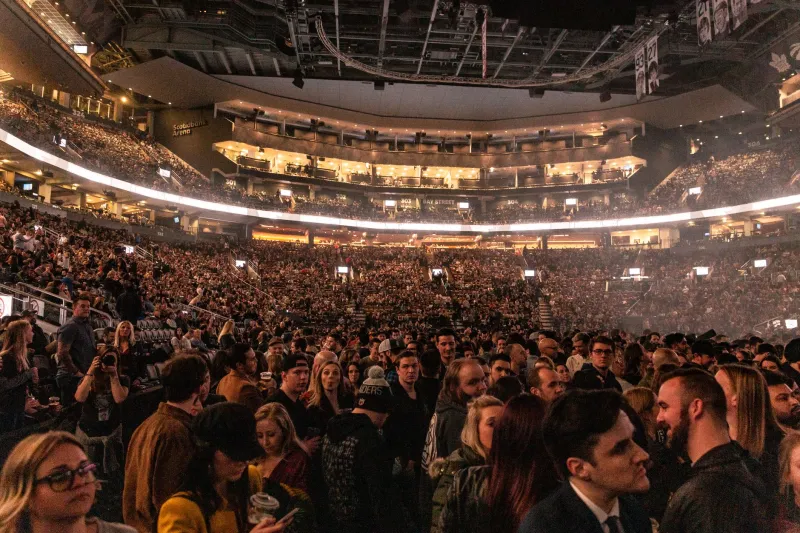
Seventy thousand people in one place, most of them holding a phone, none of them able to move quickly. Large venues have always presented a personal safety challenge that no individual app was designed to solve — until venues started solving it themselves.
Across the United States, arenas, music festivals, and mass transit systems are quietly becoming the most active laboratories for personal safety technology. In-app panic features now connect directly to stadium security operations. Crowd-density alerts warn attendees before bottlenecks become crushes. Transit authorities are experimenting with emergency reporting built into the same apps riders use to buy a ticket. What's emerging is a picture of safety tech in public spaces that looks quite different — and in some ways more mature — than the personal-use apps most people know.
Why Venues Moved First
The logic that pushed venues into this space is straightforward. A stadium already has security staff, cameras, and an operations center watching feeds in real time. What it historically lacked was a fast channel from an individual attendee — someone being harassed in a concourse, feeling unwell in section 214, noticing something wrong — to the people who could respond.
Digital safety platforms close that gap. Several major US venues now integrate panic reporting into their official apps: an attendee taps a button, their section and seat are transmitted automatically, and the nearest security team gets a precise location rather than a vague description shouted over a radio. Response times in pilot programs have improved measurably, because the hardest part of venue security — locating the incident among 70,000 people — is solved by the report itself.
The same principle is extending to festivals, where the environment is even less structured. Organizers at large multi-day events have adopted tools that let attendees report medical emergencies, lost children, or unsafe behavior with a pin dropped on a venue map. For a crowd spread across fairgrounds at night, that precision is genuinely new.
Crowd Density: The Quiet Breakthrough
The most consequential development may be the least visible to attendees. Crowd-crush incidents in recent years — in the US and abroad — have pushed venues to invest in real-time density monitoring, often using anonymized phone location data to map where crowds are building.
The practical output is alerts and interventions: gates redirected, exits opened, messages pushed to phones telling attendees to avoid a congested corridor. In the best implementations, the system works so smoothly that attendees never know a dangerous situation was defused before it formed.
This is safety technology operating at infrastructure scale — closer to how a city manages traffic than how an individual manages their personal security. And it works precisely because it's aggregated and anonymous rather than personal and identifiable.
The Privacy Trade-Off, Stated Plainly
That word — anonymous — deserves scrutiny. Density monitoring that truly aggregates data and discards individual trajectories is one thing. Location tracking that persists, that ties a phone to a seat, a payment, and a pattern of attendance across a season, is another. Attendees generally can't tell the difference from the outside, and venues have little uniform incentive to explain it.
The reasonable position is neither alarm nor indifference. Tracking that lasts the duration of an event and feeds only into crowd management serves a legitimate safety purpose most attendees would endorse if asked. Tracking that builds longitudinal profiles of where specific people go, week after week, crosses into territory that has nothing to do with safety and everything to do with data valuation.
Attendees have some leverage here. Venue apps typically request location permission at download; choosing "while using the app" rather than "always" preserves emergency-report functionality while limiting background collection. Reading a venue's privacy summary takes two minutes and, at major venues, increasingly discloses whether location data is shared with third parties. The tools for informed participation exist — they're just rarely advertised.
What Works, and What to Expect Next
The features earning their keep at US venues share a common thread: they connect the attendee to an existing, professional response system rather than asking the attendee to fend for themselves. Panic reporting to security operations works. Density alerts work. Medical reporting with precise location works. What has struggled is anything depending on attendee vigilance — complicated check-in flows, features requiring setup in a crowded gate line, anything that assumes people read instructions at a concert.
The next phase is integration. Expect transit apps and venue apps to share emergency reporting, expect panic features to become as standard as bag checks, and expect the privacy conversation to sharpen as location-based safety infrastructure expands from stadiums into downtown districts and transit networks generally.
For attendees, the practical takeaway is simple: download the venue's official app before you arrive, grant it the permissions it needs for the duration of the event, and know where the panic button lives before the crowd starts moving. In a venue of seventy thousand, the fastest help is the one you can reach with one tap.