When Sharing Your Location Puts You at Risk: The Hidden Vulnerabilities Inside Safety Apps
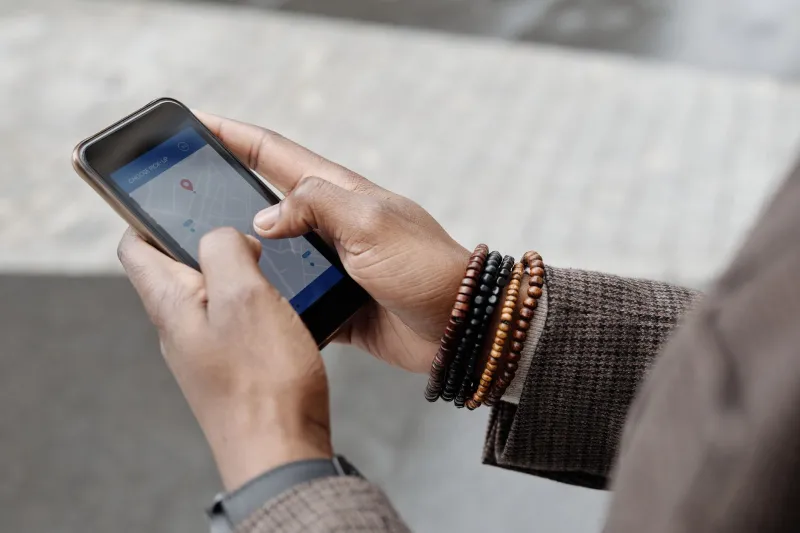
There is a quiet irony at the heart of modern personal safety technology. The same feature designed to ensure someone knows where you are at all times—real-time location sharing—can, under the wrong circumstances, become a precise and persistent threat to your security. For millions of Americans who rely on safety apps to protect themselves and their families, this tension is not theoretical. It is a daily reality that most users never fully examine.
Understanding how location data is collected, stored, and potentially exposed is no longer optional. It is an essential part of using any safety platform responsibly.
The Promise and the Problem
Location sharing works because it solves a genuine human need: the desire to feel connected and monitored by people who care about your wellbeing. A parent tracking a college student's late-night commute, a spouse checking in on a partner traveling for work, a friend group ensuring everyone got home safely after a night out—these are legitimate, meaningful uses of the technology.
The problem emerges not from the intention but from the infrastructure. When a safety app records your location, that data must be stored somewhere. It travels across servers, is processed by software, and in many cases is retained long after the moment it was relevant. Each step in that journey represents a potential point of exposure.
According to research from the Electronic Frontier Foundation and various privacy advocacy groups, a significant number of popular apps—including some marketed explicitly as safety tools—share location data with third-party advertisers and data brokers. This practice is frequently disclosed only in dense terms-of-service agreements that few users read in full.
How Stalkers and Bad Actors Exploit Safety Features
The domestic abuse advocacy community has long recognized the dual-use nature of location technology. Organizations such as the National Domestic Violence Hotline regularly counsel survivors on how tracking features embedded in shared family plans, joint accounts, and safety apps can be weaponized by abusers who retain access to shared devices or account credentials.
The mechanics are often straightforward. A former partner who still has login credentials to a shared family safety app can monitor movements with the same precision as any authorized user. Some apps do not send notifications when a new device logs into an existing account, meaning surveillance can begin without the target's awareness.
Beyond intimate partner scenarios, cybercriminals have demonstrated an interest in location data as a gateway to broader personal information. Knowing when a home is regularly unoccupied, identifying predictable commuting patterns, or confirming that a high-value target is traveling out of state—these are all insights that precise location histories can provide to someone with malicious intent.
The Data Broker Ecosystem
Perhaps the least visible threat is also the most systemic. A thriving industry of data brokers operates largely outside of public awareness, aggregating location information purchased from app developers, telecommunications companies, and advertising networks. This data is then sold to a wide range of buyers, including marketers, insurers, employers, and in some documented cases, law enforcement agencies operating without warrants.
For the average user, this means that the location history generated by a safety app may persist in commercial databases long after the app is deleted. In 2023 and 2024, multiple investigative reports by outlets including The Wall Street Journal and Wired documented the ease with which precise location data could be purchased for specific individuals, often for remarkably low costs.
The Federal Trade Commission has taken action against some data brokers in recent years, but the regulatory landscape remains fragmented and enforcement inconsistent across states.
Navigating Permission Settings Most Users Miss
Not all risk is unavoidable. Many of the most significant exposures can be substantially reduced through deliberate configuration of app permissions—settings that most users never explore beyond the initial setup.
Location permission granularity. Both iOS and Android now allow users to grant apps access to their precise location or only their approximate location. For many safety app functions, approximate location is sufficient for check-in features and general area monitoring. Switching from precise to approximate can meaningfully reduce the specificity of data that is collected and potentially shared.
Background location access. Granting an app permission to access location only while in use—rather than continuously in the background—limits the volume of data generated. Review this setting for every app on your device, not only dedicated safety applications.
Data retention and deletion policies. Before selecting a safety platform, review its privacy policy specifically for language about how long location data is retained and whether it can be manually deleted by the user. Platforms that offer user-controlled data deletion provide a meaningful layer of protection.
Shared account auditing. If you use a family safety plan or shared account, periodically audit which devices and users have active access. Remove accounts that are no longer relevant, and enable login notifications if the platform supports them.
Third-party sharing opt-outs. Many apps include opt-out mechanisms for data sharing with advertising partners, but these options are frequently buried in settings menus rather than presented during onboarding. Locate and activate these controls proactively.
Choosing a Platform With Privacy as a Design Principle
Not every safety app treats user data with the same degree of care. When evaluating platforms, look for those that articulate a clear, specific privacy commitment rather than relying on boilerplate language. Key indicators include end-to-end encryption of location data, explicit prohibitions on selling user data to third parties, transparency reports, and independent security audits.
The goal is not to abandon location sharing entirely—its protective benefits are real and well-documented. Rather, the goal is to use it deliberately, with a clear understanding of who has access to your data, how long it is retained, and under what circumstances it might be disclosed.
A More Informed Approach to Personal Safety
Personal safety technology is most effective when users engage with it critically rather than passively. The instinct to install an app and trust that it will handle the details is understandable, but it leaves significant gaps that determined bad actors can exploit.
Taking thirty minutes to review the privacy settings on your current safety apps, audit shared account access, and read the data retention policies of the platforms you rely on is not a dramatic undertaking. But it represents a meaningful shift from passive user to informed participant—and in the context of personal safety, that distinction matters considerably.
At GetSafe, we believe that genuine protection requires transparency about both capabilities and limitations. Location sharing is a powerful tool. Like any powerful tool, it demands respect, attention, and a clear-eyed understanding of the risks it carries alongside its benefits.