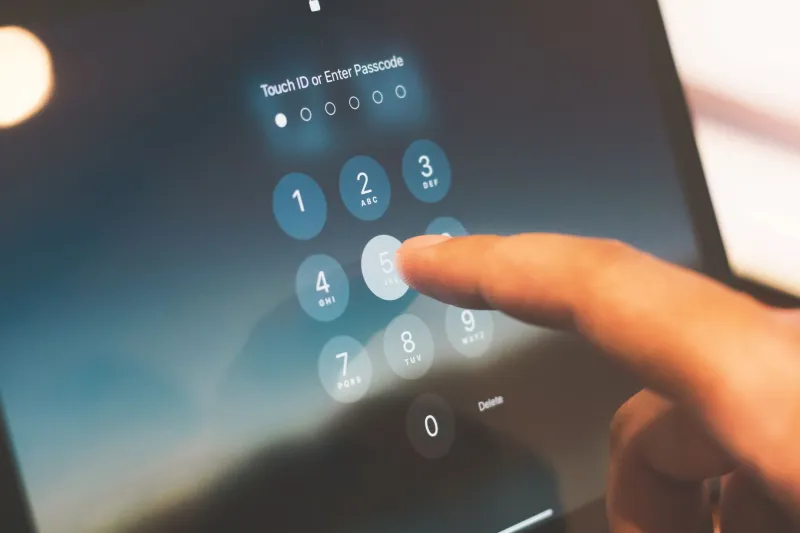
When Watching Your Back Becomes All You Do: Breaking the Cycle of Safety App Overload

There is a quiet irony embedded in the modern personal safety landscape. The same smartphone application you downloaded to feel more secure may, over time, become a source of persistent unease. Notifications that were meant to reassure you arrive at inconvenient hours. Location-sharing dashboards pull your attention away from the street in front of you. And somewhere between the third alert of the morning and the second battery drain of the week, the tool designed to protect you has become the very thing demanding your protection from it.
This is not a fringe experience. Security professionals, behavioral psychologists, and everyday users across the United States are beginning to acknowledge a pattern that has emerged alongside the rapid adoption of personal safety technology: the more intensely a person monitors their safety tools, the less present—and therefore the less safe—they may actually be.
The Attention Economy Meets Personal Security
Personal safety applications operate within the same attention economy as every other app on your device. Push notifications, real-time alerts, check-in reminders, and live location feeds are all engineered to keep you engaged. In the context of social media, this engagement model has well-documented psychological consequences. In the context of safety technology, those consequences carry an additional dimension: they can erode the very situational awareness that security experts consistently identify as a person's first and most reliable line of defense.
Situational awareness—the practice of actively perceiving, processing, and anticipating your immediate environment—is not a passive skill. It requires cognitive bandwidth. When that bandwidth is occupied by a screen, a notification queue, or the low-grade anxiety of waiting for the next alert, your capacity to read a room, notice a potential threat, or make a quick judgment call is measurably diminished.
Dr. Anita Sorrells, a licensed clinical psychologist based in Chicago who works with clients experiencing technology-induced anxiety, describes the pattern plainly: "What I see in my practice is people who feel safer because they have an app running, but who are simultaneously more anxious because they are constantly monitoring it. The app becomes a security blanket that also happens to have a very loud alarm."
Hypervigilance Is Not the Same as Safety
There is an important distinction between being vigilant and being hypervigilant. Healthy vigilance is adaptive. It allows you to move through the world with appropriate awareness—noticing what is unusual, responding proportionately, and then returning to a baseline state of calm. Hypervigilance, by contrast, is a chronic state of heightened alert that never fully resolves. It is exhausting, cognitively expensive, and, paradoxically, less effective at detecting genuine threats because the nervous system has been conditioned to treat everything as a potential emergency.
Safety applications, when used without clear personal boundaries, can inadvertently train users into a hypervigilant relationship with their own security. Every location ping becomes a potential concern. Every delayed check-in response from a family member triggers a cascade of worst-case thinking. Every news alert about a crime in a neighboring zip code recalibrates the perceived danger of ordinary activities.
For parents monitoring teenage children, this dynamic is particularly pronounced. The ability to track a child's location in real time is a genuinely valuable safety feature. But research on parental monitoring behavior consistently shows that access to real-time data often increases parental anxiety rather than reducing it—particularly when the data is ambiguous, such as when a teen's phone battery dies or their GPS signal temporarily drops in a parking garage.
Designing a Healthier Relationship With Safety Technology
None of this is an argument against using safety applications. The features offered by modern personal safety platforms—emergency SOS functions, trusted contact networks, automated check-ins, and location sharing—represent meaningful advances in personal protection. The goal is not to abandon these tools but to use them with greater intentionality.
Security consultants who work with corporate clients on employee safety programs often use the phrase "background layer" to describe the ideal relationship between a user and their safety technology. The application should function the way a smoke detector functions in your home: present, reliable, and capable of alerting you when conditions genuinely require your attention—but not something you stare at while cooking dinner.
Achieving that background-layer dynamic requires deliberate configuration. Consider the following practical adjustments:
Audit your notification settings. Most safety applications allow granular control over which events trigger alerts. Review these settings with intention. Not every low-battery warning or minor location update warrants an immediate notification. Limit active alerts to the events that genuinely require your attention.
Establish check-in windows rather than continuous monitoring. Instead of maintaining a live feed of a family member's location throughout the day, agree on scheduled check-in intervals. This preserves the safety benefit of location awareness while reducing the cognitive load of continuous surveillance.
Separate your safety app from your general notification stream. Many users make the mistake of allowing their safety application to compete for attention alongside social media, email, and news alerts. Consider placing your safety app in a dedicated folder and setting it to deliver alerts through a distinct notification channel—ideally one reserved exclusively for genuine safety communications.
Practice deliberate disconnection. Designate windows of time during which you are not actively monitoring safety dashboards. This is not negligence; it is a recognition that your own presence and awareness are themselves safety assets that require protection.
The Role of Trust in Reducing Safety Anxiety
Underlying much of the anxiety that safety applications can amplify is a deficit of trust—trust in the environment, trust in other people, and trust in one's own capacity to handle unexpected situations. Technology cannot manufacture that trust. What it can do is serve as a reliable backstop for moments when circumstances genuinely exceed what any individual can manage alone.
The most effective users of personal safety technology tend to share a common orientation: they have thought carefully about what they actually need the application to do, they have configured it accordingly, and they have made peace with the limitations of any digital tool. They understand that an application is a supplement to their own judgment, not a replacement for it.
Getting safe—genuinely safe—means more than having the right app installed. It means being present enough in your own life to notice what is happening around you, calm enough to respond rather than react, and informed enough to use your tools wisely rather than compulsively.
Finding the Right Balance
Personal safety technology will continue to evolve, and the features available to American consumers will only grow more sophisticated. Wearable emergency devices, AI-assisted threat detection, and predictive safety alerts are already moving from concept to market. Each new capability will bring with it the same fundamental question: is this tool serving you, or have you begun serving it?
The answer depends less on the technology itself than on the habits and expectations you bring to it. Used with discipline and clarity, a personal safety application is one of the most practical investments you can make in your own security. Used without those guardrails, it risks becoming another source of the very vulnerability it was designed to address.
Your safety is worth protecting. So is your ability to be fully present in your own life. With the right approach, those two goals are not in conflict—they are the same goal.